Whale footage taken by Ed Lyman/NOAA, under NOAA Permit #s 15240, 15642, 24359
Every winter, thousands of humpback whales travel to the warm, shallow waters of Hawai‘i to mate, give birth, and raise their young. Hawaiian Islands Humpback Whale National Marine Sanctuary protects these whales and their habitat. From November through April, visitors to the sanctuary can see whales from shore and at sea.
For 30 years, Sanctuary Ocean Count has connected communities across Hawaiʻi to humpback whales through a signature community science program led by the Hawaiian Islands Humpback Whale National Marine Sanctuary. Launched in 1996, the program engages volunteers in shore-based observations during the winter months, when thousands of koholā return to Hawaiian waters to breed, calve, and nurse, contributing valuable long-term data while fostering public awareness, responsible whale viewing, and lasting connections to Hawaiʻi's marine environment.

What does it take to tag a humpback whale from the sky? Before koholā arrive in Hawaiʻi, sanctuary scientists run high-energy drone drills from a moving vessel—practicing pinpoint accuracy on a towable surfboard to prepare for real-world whale research.

Learn more about the current research being conducted throughout the year here in Hawaiian Islands Humpback Whale National Marine Sanctuary by our dedicated team of researchers and collaborators to protect humpback whales and their habitat. Our annual research report provides a brief overview of all ongoing research at the sanctuary, as well as our annual achievements, publications, and management implications of our work, so they are a great way to stay informed!

Humpback whales are back and so are we! When we returned to work in mid-November, sanctuary staff quickly got ready for another busy whale season, conducting entanglement response training across the islands, drone training for research and response, and vessel shakedowns to ensure everything and everyone is prepared for whatever the season hands us this winter. You will find more stories of science, community, and compassion in the winter edition of our newsletter.
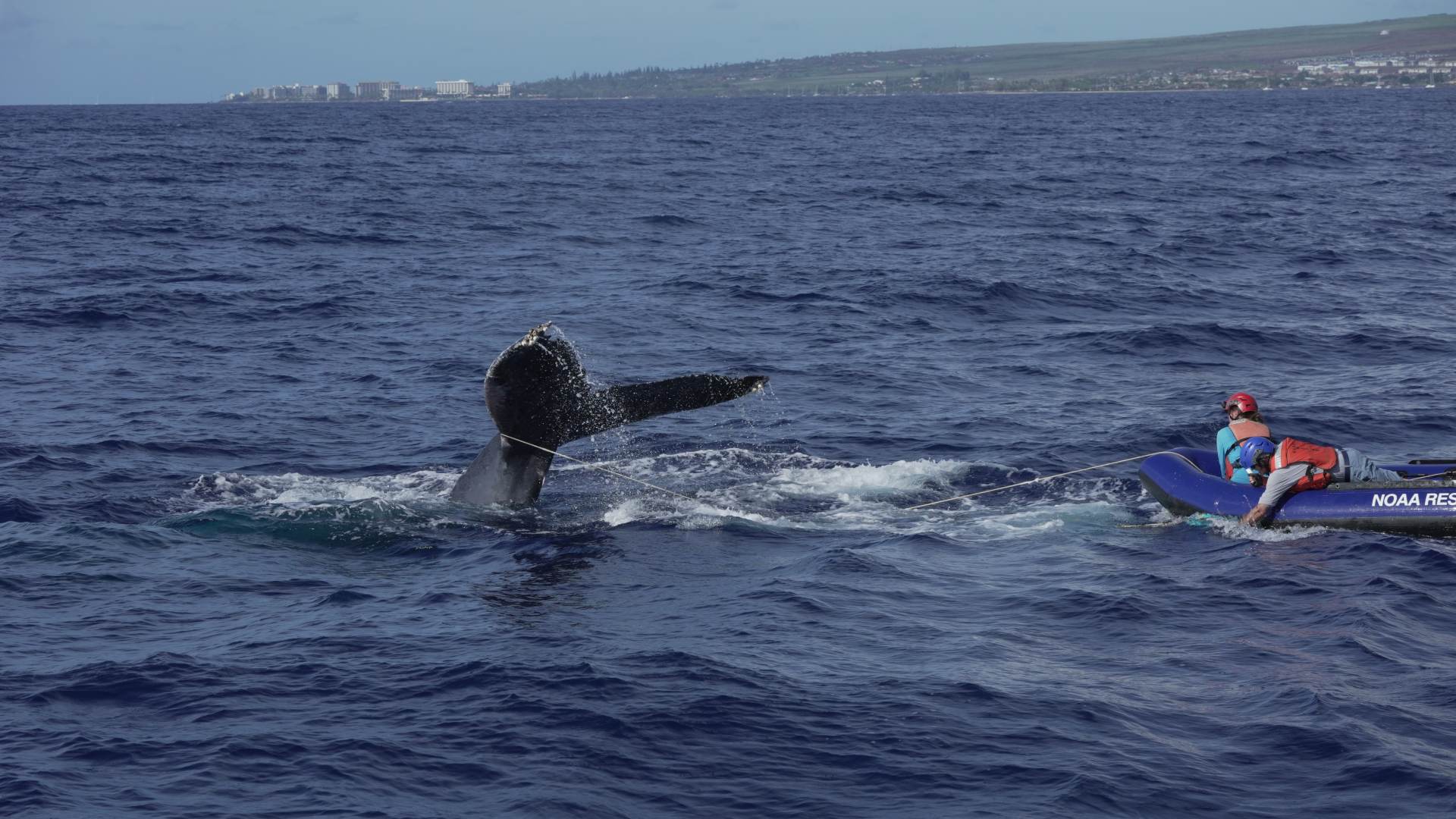
When a young koholā (humpback whale) was found entangled off Maui’s coast in 2017, its survival seemed unlikely. Thanks to expert responders, the whale was freed—and spotted again, healthy, seven years later. This story showcases the power of science, innovation, and community in safeguarding marine life.

The 2024-2025 humpback whale season was the network’s 23rd season, and the busiest to-date. There were 32 confirmed reports representing 16 entangled whales. There were 17 on-water response efforts mounted to 7 animals over an extremely busy 3 month period. This unprecedented level of activity highlights both the need for intervention and the dedication of the response network in Hawaiʻi.

In February, Julia M. Zeh, Marc O. Lammers, Adam A. Pack, and Susan E. Parks published “Movement and sound production in yearling humpback whales: age-class comparisons” in the journal Behavioral Ecology and Sociobiology. This paper is based on data collected in the sanctuary by our researchers, which include movement, audio, and sometimes video recorders, to better understand humpback whale behavior in Hawaiʻi.

We had another successful year of the Sanctuary Ocean Count and the Great Whale Count. With the help of 1,353 volunteers, we counted whales from 44 different sites across Hawaiʻi Island, Maui, Molokaʻi, Lānaʻi, Oʻahu, and Kauaʻi. A total of 4,782 koholā, humpback whales, were counted over the three days of the event. This number may represent duplicate sightings of the same whale by different observers or at different time periods or different locations throughout the day. Mahalo to all who participated in counts this year. We look forward to folks joining us next year for our 2026 Ocean Count/Great Whale Counts!

A recently published paper, in the journal Marine Mammal Science, describes two recent incidents of humpback whales feeding in Hawaiʻi, as well as historical documented instances of whale defecation in the area. This study highlights how humpback whales interact with and contribute to Hawaiʻi’s marine ecosystems.

The sanctuary has worked in partnership with the State of Hawaiʻi Department of Land and Natural Resources, Pacific Whale Foundation, and members of the on-water community to develop speed recommendations for boating around whales. We recommend maintaining a recommended top speed of 15 knots, or safe planing speed, at all times while transiting during whale season to reduce impacts from collision with large whales.

Native Hawaiians manage natural resources in ahupua’a, which are land divisions that run from the mountains to the sea. The sanctuary follows this traditional wisdom that recognizes what happens on the land (mauka) impacts the ocean (makai). Within the ocean, koholā serve as ambassadors for collaborative, holistic management to address local and global stressors and protect habitat mauka to makai across the Hawaiian Islands.
Always keep a safe and legal distance (100 yards) from humpback whales.
To report an entangled whale, call the NOAA Fisheries Hotline at 888-256-9840 or hail the U.S. Coast Guard on VHF channel 16.
To report a violation of approach guidelines and regulations, call the NOAA Fisheries Enforcement Hotline, 800-853-1964.
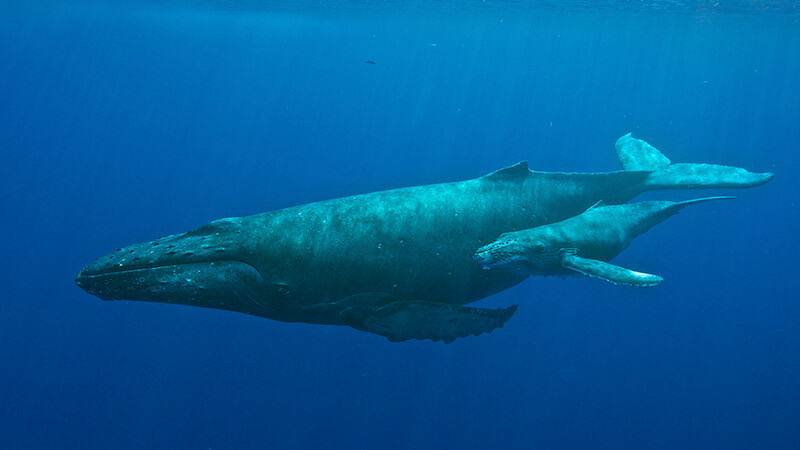
More than half of the humpback whales in the North Pacific seasonally use the waters around the Hawaiian Islands as their principal breeding and calving wintering ground. The sanctuary's mission is to protect Hawai‘i humpback whales and this extremely important habitat through closely aligned education, research, and resource protection efforts. The sanctuary works with the community and our other partners to reduce threats to humpback whales, including through enforcement.
Photo: Ed Lyman/NOAA, under NOAA permit #14682
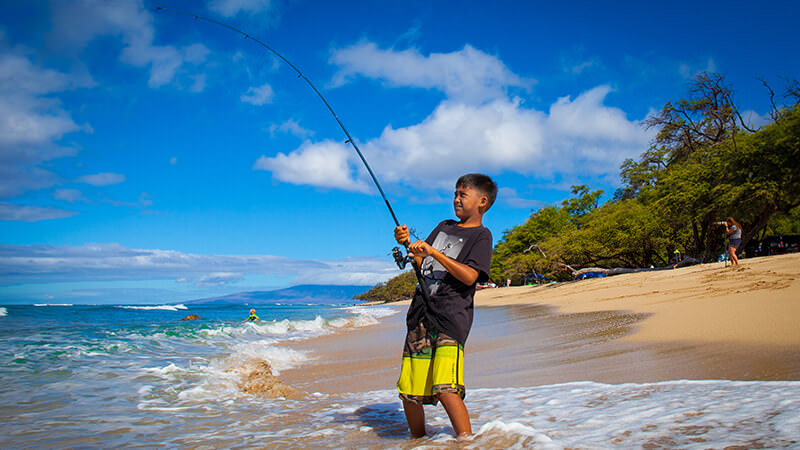
The sanctuary encourages water-based activities that are compatible with our mission of protection. Whether you're boating, snorkeling, kayaking, fishing, or whale watching, there's plenty to responsibly enjoy in Hawaiian Islands Humpback Whale National Marine Sanctuary.
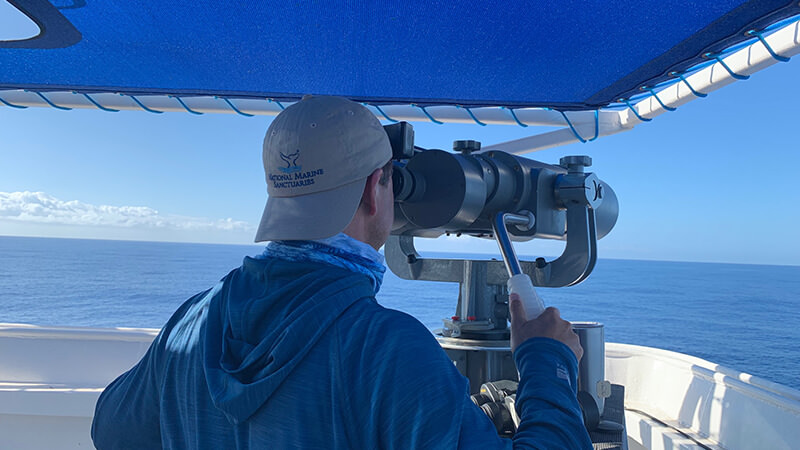
The sanctuary leads and collaborates in research projects that assess the Hawai‘i population of humpback whales and their use of sanctuary waters. Studies of humpback whales and their activities include documenting whale distribution and abundance, examining their behavior and monitoring potential human impacts.
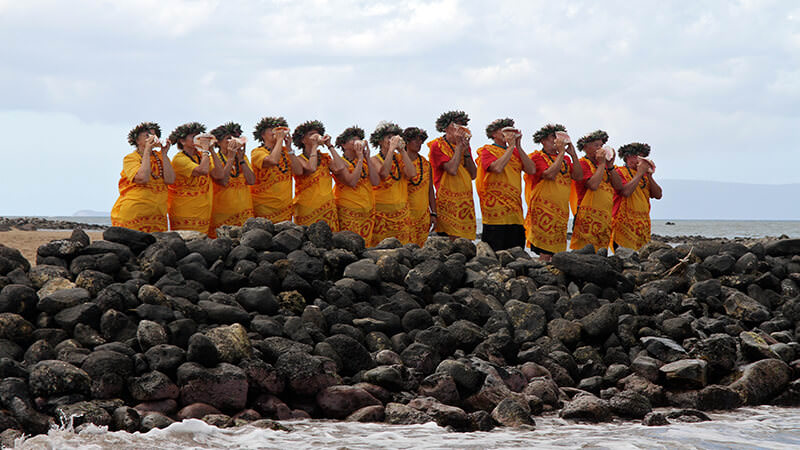
Ocean stewardship is deeply embedded in Native Hawaiian culture. Humpback whales, or koholā, are an important part of history, legends, and connection to the sea. The cultural and maritime heritage of Hawai‘i plays a role in management decisions and how the sanctuary's daily activities are carried out.
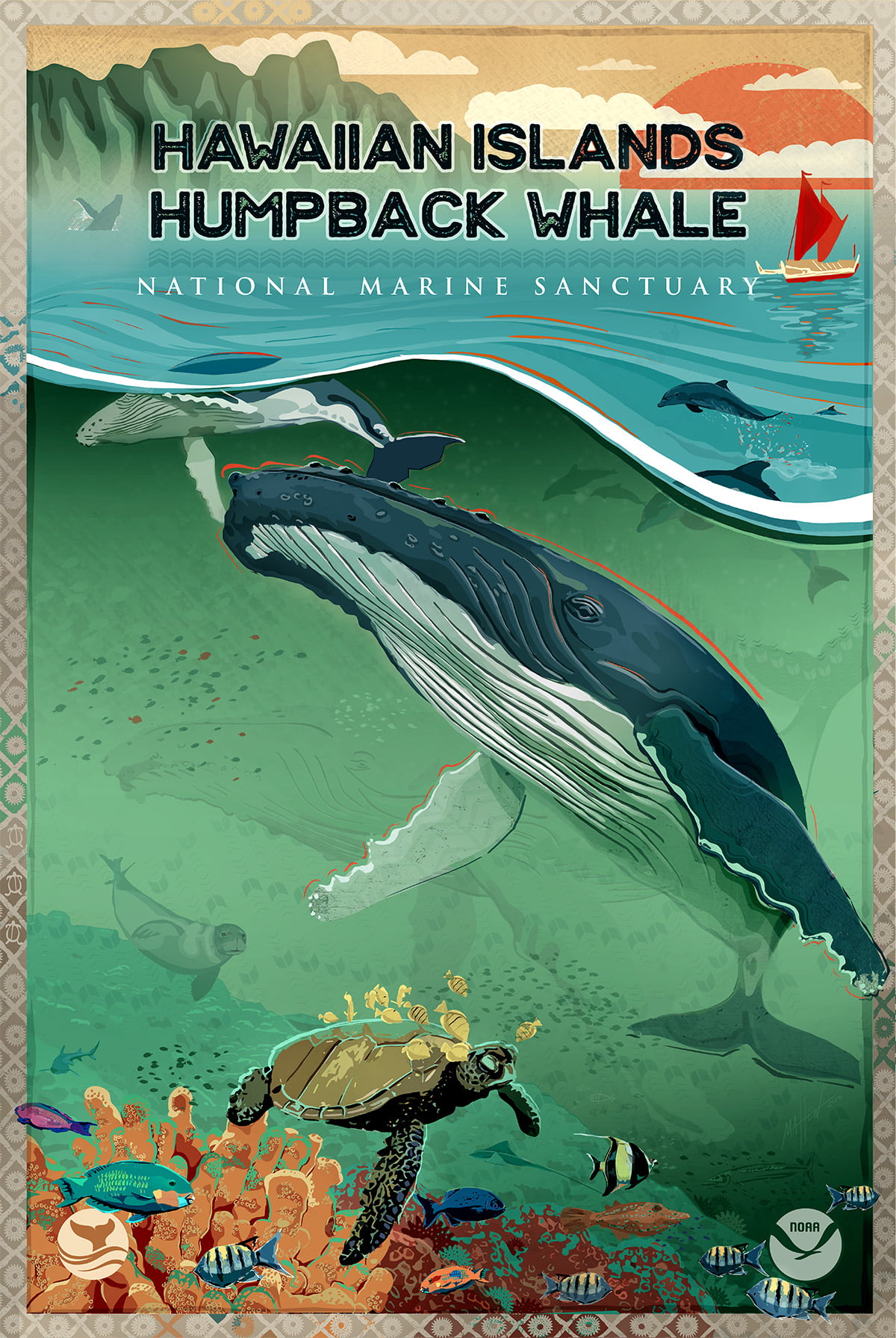
Hawaiians managed natural resources in ahupua’a, which are land divisions that run from the mountains to the sea. The sanctuary follows this traditional wisdom that recognizes what happens on the land (mauka) impacts the ocean (makai). Within the ocean, koholā serve as ambassadors for collaborative, holistic management to address local and global stressors and protect habitat mauka to makai across the Hawaiian Islands.

Safeguarding America's Premier Marine Places
From Washington state to the Gulf of America and from the Great Lakes to the Pacific Islands, the National Marine Sanctuary System protects 18 underwater parks spanning over 629,000 square miles of ocean and Great Lakes waters. By investing in innovative solutions, we strengthen these iconic places to address 21st-century challenges while supporting America's commerce and tourism. These unique locations inspire people to visit, value, and steward our nation’s iconic ocean and Great Lakes waters.


